Mandala Design: A Comprehensive Guide for Creative Applications
The Mandala Design represents a profound intersection of spiritual symbolism and geometric precision. Rooted in ancient traditions, the mandala is a circular diagram that serves as a tool for meditation, focusing attention, and facilitating a state of relaxation. In contemporary design contexts, these intricate patterns have transcended their religious origins to become versatile assets for graphic design, textile arts, and personal expression. This guide explores the utility of circular pattern mandala art decoration elements, evaluating their suitability for various projects ranging from adult coloring books to professional business branding.
Understanding the Essence of Circular Patterns
At its core, a mandala is defined by its radial symmetry. The word itself is Sanskrit for "circle," representing wholeness and the universe. Visually, these designs feature concentric circles radiating from a central point, often filled with floral motifs, arabesque curves, and repetitive geometric shapes. The complexity of the design can vary significantly, from simple, bold outlines suitable for quick coloring to highly detailed vector illustrations intended for high-resolution printing.
When selecting a Mandala Design for a specific project, it is essential to understand the structural integrity of the pattern. High-quality vector files allow designers to manipulate these circular elements without losing resolution. This flexibility is crucial because the same asset might need to be scaled down for a small tattoo or expanded to cover an entire wall mural. The inherent balance of the circle creates a sense of harmony that is psychologically soothing, making these designs particularly effective for applications focused on wellness and mindfulness.
Diverse Applications Across Industries
The versatility of mandala art stems from its ability to adapt to different mediums while maintaining its aesthetic appeal. Below are key areas where circular pattern mandala art decoration elements are frequently utilized:
- Meditation and Wellness: The primary historical use of mandalas is as a focal point for meditation. In this context, the design helps anchor the mind. For meditation posters, high-contrast black-and-white versions are preferred to reduce visual noise and encourage deep concentration.
- Adult Coloring Books: The intricate nature of mandalas makes them ideal for stress relief through coloring. Detailed line work provides a therapeutic challenge, allowing users to engage in a flow state. These designs require clean lines and consistent stroke weights to ensure they print clearly on standard paper.
- Tattoo and Body Art: For tattoos, henna, and mehndi, the circular symmetry offers a flattering structure for the human body. Mandalas wrap naturally around limbs and the back. The continuous line quality ensures that the design looks cohesive even when applied to curved surfaces.
- Stationery and Business Branding: Floral designs within mandalas add an element of elegance to business cards, greeting cards, and wedding invitations. They convey sophistication and attention to detail. When used on gift vouchers, they elevate the perceived value of the item.
- Fashion and Textiles: As background patterns for clothing or fabric, mandalas create a mesmerizing effect. The repetition of the pattern allows for seamless tiling, which is essential for manufacturing large quantities of fabric.
Technical Considerations for Digital Assets
For professionals utilizing these designs, the file format and technical specifications are critical determinants of success. A robust collection of Mandala Design assets should include multiple formats to accommodate different software environments and output requirements.
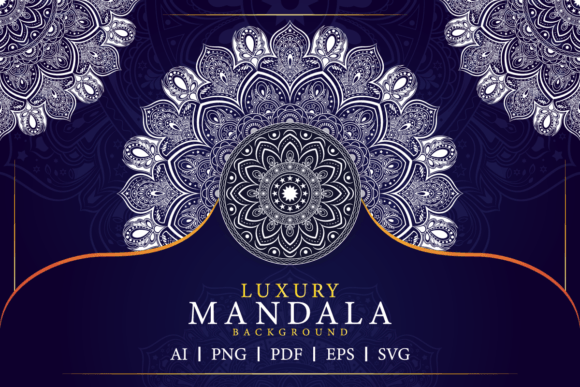
Users typically receive source files in Ai (Adobe Illustrator), EPS, and SVG formats. These vector formats are non-negotiable for scalable graphics. They ensure that the artwork remains crisp regardless of size. Additionally, PNG files provide rasterized options with transparent backgrounds, useful for web design and quick mockups. PDF files are essential for ensuring that the layout and typography remain intact across different systems during the printing process.
A critical metric for print-ready work is resolution. Professional standards dictate a minimum of 300 dpi (dots per inch) for physical printing. Files meeting this specification guarantee that fine details in the floral or arabesque elements do not appear pixelated or blurry. Furthermore, compatibility with cutting machines is a vital consideration for crafters and sign makers. The ability to adjust the size of the vector illustration inside a cutting machine software allows for precise production of decals, stickers, and apparel transfers.
Evaluating Benefits and Tradeoffs
Choosing a Mandala Design involves weighing several factors. The benefits are substantial. The universal appeal of the circle means these designs resonate with diverse audiences across cultures. They are inherently balanced, reducing the cognitive load required to process the image, which is why they are so effective in calming environments. From a practical standpoint, the availability of vector files means a single purchase can yield unlimited variations in color, size, and orientation.
However, there are tradeoffs to consider. The complexity of some mandala patterns can be overwhelming if not implemented correctly. In business card design, for instance, an overly busy mandala background can obscure text and reduce readability. Similarly, for tattoo applications, very fine lines may fade over time or blur on certain skin types. It is important to select a design that matches the intended lifespan and viewing distance of the final product.
Another consideration is originality. Because mandalas are popular, using a generic, widely available template can result in a lack of uniqueness. While high-quality vector illustrations offer better distinctiveness than low-resolution stock images, customizing the design—such as altering the color palette or integrating specific monograms—is often necessary to achieve a truly bespoke look.
Situational Fit and Alternatives
A Mandala Design is a strong fit for projects requiring themes of unity, spirituality, luxury, or organic complexity. It is the optimal choice for wedding invitations where a romantic, timeless feel is desired, or for gift vouchers where a premium aesthetic is needed. For meditation posters and coloring pages, it is arguably the superior choice due to the psychological connection between circular geometry and mental calm.
Conversely, alternatives may be worth considering depending on the project goals. If the objective is to convey modern minimalism, corporate efficiency, or industrial strength, a mandala's ornate nature might clash with the message. In such cases, geometric abstraction or sans-serif typographic layouts would be more appropriate. Similarly, for digital interfaces where loading speed is paramount, heavy vector files might need to be simplified into simpler icons rather than full-pattern backgrounds.
Practical Decision-Making Insights
To determine if a specific set of mandala assets aligns with your needs, evaluate the following criteria before acquisition:
- File Integrity: Ensure the package includes editable vector formats like Ai or EPS. Raster-only files limit your ability to scale the design for different uses.
- Resolution Standards: Verify that the print-ready files are 300 dpi. This is non-negotiable for physical products like business cards or large-format posters.
- Cutting Machine Compatibility: Check if the vector paths are optimized for cutting machines. Clean, closed paths prevent errors during the cutting process.
- Support Availability: Reputable providers offer assistance for file issues. If you encounter problems opening the files or adjusting sizes, access to support ensures the workflow is not disrupted.
By carefully assessing these technical and aesthetic factors, creators can effectively leverage the power of circular pattern mandala art decoration elements. Whether for a personal hobbyist working on a coloring book or a professional designer crafting a brand identity, the right mandala design serves as a foundational element that enhances the overall quality and emotional impact of the project.